
TeaMaze Shop Mission
Our mission is to provide great taste in a healthy, natural form, so that drinking healthy and taking care of your body can be something you look forward to every day. More specificallty, we strive…
- To provide great taste in a healthy, natural form
- To educate people about the benefits of tea in their daily diet
- To understand people’s unique situations and tastes to find the perfect tea fit for them
- To make drinking healthy and taking care of your body something to look forward to
Tea Articles
Ready to learn more about tea? Our articles are a great place to start!
Important Information
The origins of tea date back as far as 5,000 years ago, and are shrouded in legend, making it difficult to tell exactly how the use of tea leaves was first discovered. But, as the legend goes, one day around the year 2737 B.C., the Chinese emperor Shennong was boiling some water to purify it before drinking, when a few leaves from a nearby tree blew into the bowl he was using. The emperor noticed that the color and smell of the water had changed, and, curious, he decided to taste it. Imagine his surprise when he found that the resulting brew was delicious and left him feeling energized and restored!
Another variation of the legend says that Emperor Shennong, who was a renowned herbalist credited with the invention of Chinese medicine, accidentally poisoned himself one day while experimenting with some plants. As he lay on the ground dying, a leaf fell from a tree and landed in his mouth. He began to chew on it, and was healed from the effects of the poison.
Whatever the exact details, Emperor Shennong seems to be the man we have to thank for the drink we all enjoy today. Early on, tea is thought to have been used exclusively for medicinal purposes. However, probably during the Tang Dynasty, it became popular simply for its delicious and versatile flavor. This popularity is what helped it spread across Asia, but as it spread so did its use as medicine.
In a Chinese medical book written around 220 A.D., it was said that drinking tea caused a person to think better. Later, around the year 1200 A.D., a Japanese writer declared tea to be the ultimate remedy for both the body and mind, and could make a person’s life more full and complete.
By the ninth century, records indicate that tea was already popular in the Middle East. In the seventeenth century, the Dutch East India Company brought tea to Amsterdam, and it was also in the seventeenth century that tea became known in Russia, France, Germany, and England.
There is evidence that during this time tea may have been used for medicinal purposes in Germany, but aside from that it appears that Europeans consumed it primarily for its flavor.
In the Western world today, tea is also consumed primarily for its flavor, and many people aren’t even aware of the immense health benefits that tea has to offer. Thankfully, recent trends are beginning to re-discover the medicinal value of tea. Perhaps the most amazing thing is the fact that even though it has been in use for thousands of years, we are still discovering more and more health and medicinal benefits of it today!
While by no means an exhaustive resource on the benefits and qualities of the featured teas, we hope this book will serve as a handy reference guide to tea making, and an introduction to a few of the health benefits tea has to offer. Welcome to the amazing world of tea!
How to Store Tea
There are three critical factors to consider when storing your loose leaf tea:
- Light
- Air
- Moisture
Any one of these three things can cause your tea to lose its intended flavor, as well as compromising the health benefits of it.
Light
Just like you don’t put a bookshelf in direct sunlight because it will bleach the covers of the books, don’t store your tea in direct light, as this can damage the flavor, aroma, and medicinal effects of the tea.
Air and Moisture
Air and moisture go hand in hand when it comes to storing tea, because not only does the air contain dust and germs, it also contains humidity. It is very easy for dry tea leaves to absorb this moisture, which can put your tea at a high risk of containing harmful mold and bacteria.
Good Containers for Tea Storage
A sealed bag with a foil lining to keep out light and moisture is a good option for short-term tea storage. Be sure, when resealing a bag of tea, to press as much excess air as you can out of the bag to reduce any potential moisture that could condense inside.
For long-term storage, a tin or stainless steel container is your best option. One of these containers will completely block the light and seal out air. Keep the container in a cool, dark, dry area in your kitchen—a cupboard or drawer works great.
Be sure not to store your tea in a cupboard directly above your stove, dishwasher, or electric teapot, as steam and heat from these appliances could reach your tea.
Storing tea leaves in your refrigerator or freezer is not recommended, as these are both high-humidity areas.
Shelf Life of Tea
When properly stored, your tea leaves will have a shelf life of up to two years. If you tend to buy tea in small amounts and use it quickly, a sealed, foil-lined bag is just fine. However, if you are buying a large quantity of tea and plan on it lasting a while, it is definitely a good idea to invest in a tin or stainless steel container.
Exception
Pu-erh tea is an exception to these storage and shelf-life rules. Pu-erh is usually pressed into cakes or bricks, which are then aged. Just like a fine wine, the older Pu-erh is, the better, and the cakes or bricks should be stored in an area with good ventilation.
How to Steep Tea
Contrary to many misconceptions, steeping loose-leaf tea is actually a very simple process. All you need are a loose leaf tea you enjoy, a strainer, and a way to keep track of time.
How much tea should I use?
A good rule of thumb is to start with about 1 teaspoon of tea leaves per 8 ounces of water.
So…
- 8-ounce cup = 1 teaspoon of leaves
- 12-ounce cup = 1 ½ teaspoons of leaves
- 16-ounce cup = 2 teaspoons of leaves
Note: The amount of tea you use is largely dependent on your personal taste. If you want your tea to be milder, use a smaller amount of tea leaves. If you want it stronger, use a larger amount.
How hot should the water be?
Some types of tea are more sensitive than others, so not all teas should be steeped in the same temperature water, otherwise they could be burned and taste bitter. Here’s a basic guide:
How long should I steep my tea?
Anything containing the actual tea plant (white tea, green tea, black tea, oolong tea, Pu-erh tea) should be steeped for no longer than 4-5 minutes, otherwise they can start to become bitter.
Tea that does not contain the actual tea plant (fruit tea, rooibos tea, herb tea, etc.) can be steeped for longer (anywhere from five to thirty minutes, depending upon the type) without that risk.
Can I use my Keurig®?
A Keurig® or similar device is a great way to have hot water on hand and ready whenever you want a cup of tea. That being said, you still need a tea strainer in your cup. The tea leaves need to sit and steep in the water for at least four minutes (or longer, depending on the type of tea). If you use a strainer inside the machine itself, the water is merely running through the leaves; they don’t get a chance to soak and release their flavor.
Can I reuse my tea leaves?
Yes! A good-quality tea can be steeped multiple times!
The number of times varies greatly from one tea to another, and also depends on your personal tastes. An easy way to find what works for you is to steep your leaves again and again until the tea tastes completely flat to you. Then make a note of how many cups you can get out of that particular type of tea.
Important: Do not let used tea leaves sit out for more than two hours between steeps. Because a good-quality tea has no preservatives or traces of pesticides in it, bacteria and mold will begin to grow very quickly.
Do not save your tea leaves in the refrigerator overnight.
If you don’t want to waste any uses of your leaves but you can’t drink that many cups in a day, or if it’s going to be more than two hours until you want another one, go ahead and make all the cups you can, one right after another. Combine all of them in a pitcher and put them in the refrigerator. The tea will keep that way for up to two days. You can drink it chilled, or reheat it in a microwave or on the stovetop.
What Kind of Strainer Should I Use?
The options for loose-leaf tea strainers are virtually endless, with a huge variety of styles, models, sizes, levels of complexity, and price ranges. So how do you determine which one is best for you? Here are a few basic options and categories to consider:
Tea Ball
A tea ball (or tea egg) consists of a metal mesh ball, attached to a handle or chain, that you can fill with tea leaves and drop into your teacup. It works well with most types of tea. Be aware, however, that a small tea ball is unsuitable for oolong or fruit tea, which expand to many times their original size when steeped.
Tea Basket
A tea basket rests on the rim of your cup while allowing the tea leaves to sit in the water. This kind of strainer is simple, easy to use, and is usually much roomier than a tea ball, so it’s suitable for teas that expand a lot.
Loose Leaf Tea Pot
Many models of tea pot have a strainer that fits into the top of them and automatically strains the leaves out of the tea as you pour it into your cup. This is ideal for making a larger batch of tea, whether for yourself or for sharing with friends.
French Press
It’s not just good for coffee! Your French press works great for loose-leaf tea as well! Make sure your press is thoroughly cleaned, to prevent any coffee flavor getting into your cup of tea.
Disposable Tea Bags
Another option is to buy and fill your own disposable tea bags with the type and portion size of leaves that you want. This is an easy and convenient option for students, travelers, and office environments, as well as for home use. Do your research, though, and make sure you’re using a brand that does not contain any harmful plastics or chemicals.
White Tea – Nepal Shangri-La
If you’re looking for a powerful overall health booster, white tea might be a good place to start.
History of White Tea: The earliest written records to specifically mention white tea date to around a thousand years ago, but many believe that white tea is actually the earliest form of tea consumed in Asia, since it is subjected to the smallest possible amount of processing. While green and black teas are roll, pressed, cut, or fermented, white tea is simply dried with the minimal amount of handling.
Antioxidants: White tea contains high amounts of antioxidants, which are helpful for maintaining good overall health, but have also been shown to help prevent many severe chronic diseases such as diabetes and heart disease.
Prevent Cancer: There are promising studies indicating that white tea can actually kill cancer cells and prevent their growth, while also protecting healthy cells from damage caused by cancer.
Oral Health: Other studies show that drinking unsweetened white tea can block the growth of oral bacteria, promoting healthy teeth and gums.
Brain Health: The catechins in white tea (catechins are a type of plant compound) have been the subject of several studies which indicate that drinking white tea may boost your metabolism, protect your brain from toxicity, and improve your cognitive ability.
Our Nepal Shangri-La white tea is grown at altitudes ranging from 1,200 – 2,100 meters and harvested gently by hand in Nepal. The minimal handling is evident by the delicate silver hairs still present on the fragile young buds. The flavor is a nuanced and complex bouquet of subtle floral notes and faint earthy sweetness with an almost fruity quality.
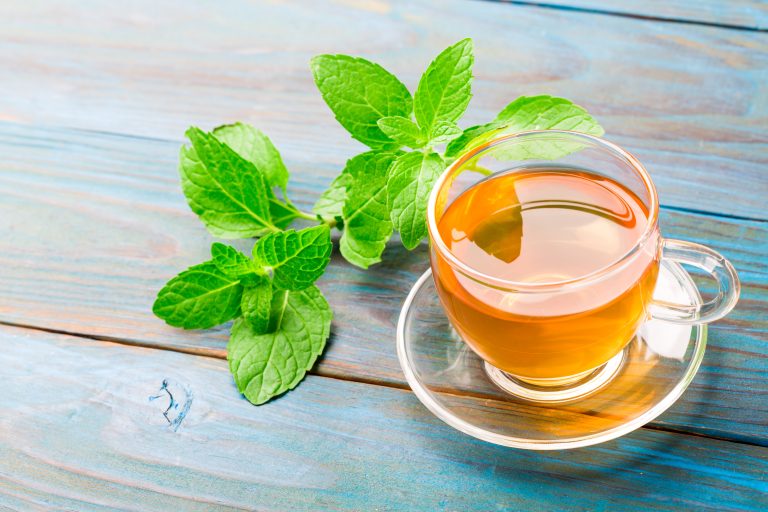
Green Tea – Spearmint
When it comes to superfoods and healthy lifestyle, green tea is a well-known favorite, and spearmint ranks high among popular home remedies.
History of Spearmint: Native to Europe and Asia, and naturalized to the Americas, mint has been a prized plant for millennia. Greek mythology, Roman and Greek historical records, and the Bible all mention mint, and much has been written about its uses throughout centuries of history.
Immune Booster: Spearmint has been documented to have powerful antibacterial effects. Paired with the antioxidants of green tea, it can give your immune system an extra push towards recovering from illness, or preventing illness from setting in in the first place.
Anti-Nausea/Anti-Inflammatory: Both green tea and spearmint are well-known for their anti-inflammatory effects. In the case of spearmint, the anti-inflammatory properties of the tea can help relax stomach muscles and calm your body, easing nausea, bloating, stomach cramps, and many other gastrointestinal issues.
Balancing Hormones: Hormones are not just an issue that women deal with! For males and females alike, hormones regulate everything about your body, and maintaining healthy balance is important for everyone. Balancing hormones can result in increased energy levels, reduction of mood swings, and reduction of acne, to name a few.
Hirsutism: Hirsutism is a condition (also caused by a hormone imbalance) that causes women to grow excessive hair on their faces and bodies. Drinking two cups of spearmint tea per day has been shown to reduce the amount of androgens (the hormone causing the condition) in the body in as little as five days.
Improving Memory: Spearmint contains a compound called limonene that is known to increase neurotransmitter activity in your brain, which has the result of improving your memory and enhancing your ability to focus. Limonene has also been shown to protect the brain from free radical damage.
Our spearmint tea is blended with high-quality Chinese gunpowder green tea, which gives it a slightly darker infusion than you may be used to, but the flavor is smooth, mild, and naturally sweet with intense minty overtones.
Black Tea – Cinnamon
Black tea is well-known and popular throughout much of the world, but in the United States many people are completely unaware of how good it can be for their health. Likewise, cinnamon is a popular ingredient in a wide range of applications, but few people are aware of the health benefits it can have.
History of Cinnamon: While cinnamon has been a highly valued spice for thousands of years (considered in ancient Egypt to be a gift worthy of even a pharaoh or god), its origin remained a mystery for centuries. Traders and merchants made up outlandish stories about its source to keep rivals from finding it. It wasn’t until the 1500s that Portuguese discovered cinnamon in Ceylon, and the secret was out.
Antioxidant Effects: In a study comparing 26 of the most common herbs and spices used medicinally, cinnamon ranked #1 for the highest antioxidant effects! Antioxidants play a role in preventing disease and the negative effects of aging. Paired with the antioxidant effects of black tea (surprisingly, black tea contains about the same level of antioxidants as green tea), Cinnamon Black Tea is an excellent way to promote good overall health.
Heart Health: Cinnamon has been shown to promote good cardiovascular health by helping to reduce LDL “bad” cholesterol while keeping HDL “good” cholesterol levels stable. Both cinnamon and black tea have been shown reduce high blood pressure, reducing the risk of heart attack and stroke.
Diabetes: Studies have shown cinnamon to be effective in reducing insulin resistance, which lowers your risk of getting diabetes in the first place. If you already have diabetes, cinnamon can help lower your hunger and sugar cravings, and helps promote weight loss.
Women’s Issues: Consuming cinnamon can be helpful with women’s issues such as endometriosis, uterine fibroids, menorrhagia, and the prevention of yeast infections.
Important: Cinnamon is not recommended for people taking blood thinners, people who suffer from ulcers, or women who are pregnant or nursing.
Our cinnamon black tea is a classic blend of Ceylon black tea featuring high-quality Ceylon crushed cinnamon pieces for a warm and balanced taste.